
Article
World’s Oldest Christian Pipe Organ Restored and Heard Again
An 11th-century pipe organ, described by researchers as the oldest in the Christian world, has been restored and played in Jerusalem’s Old City for the first time in 800 years.
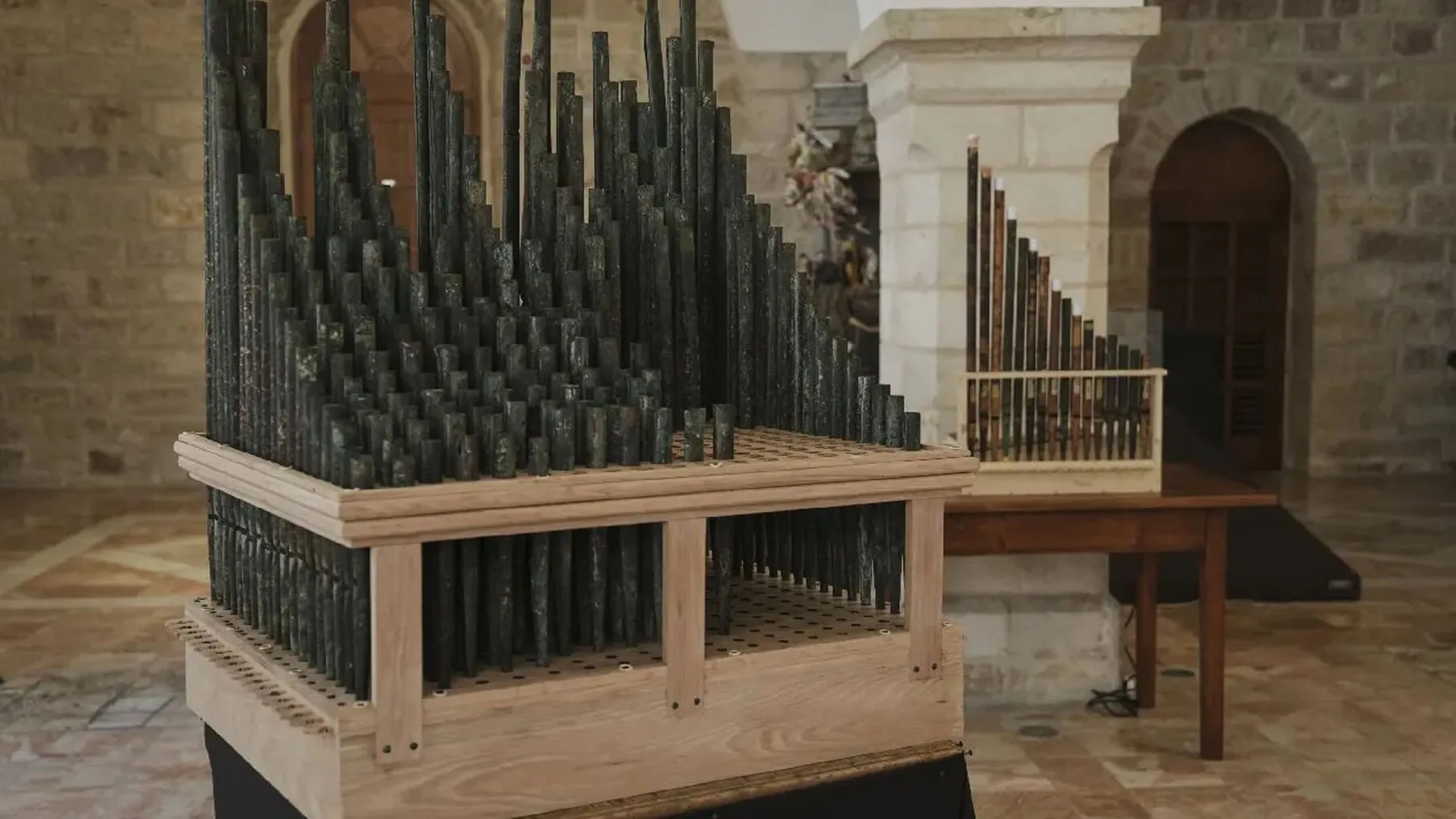
An 11th-century pipe organ, described by researchers as the oldest in the Christian world, has been restored and played in Jerusalem’s Old City for the first time in 800 years.
The instrument, whose core includes original bronze pipes dating back nearly a millennium, was heard again on 9 September when Spanish musician and musicologist David Catalunya performed chants on it at the Monastery of Saint Saviour.
Speaking at a press conference ahead of the unveiling, Catalunya called it “a landmark moment in the history of music.” He added: “When this organ was buried, it carried the hope that one day it would be heard again. That day has finally come, almost eight centuries later.”
The organ will be placed in the Terra Sancta Museum, only a few kilometres from Bethlehem where it was first played. Researchers believe Crusaders brought it there during their rule over Jerusalem in the 11th century. After around a hundred years of use, it was carefully buried to protect it from advancing Muslim forces.
It remained hidden until 1906, when workers in Bethlehem uncovered traces of it while building a Franciscan hostel. Archaeologists later excavated 222 bronze pipes, a set of bells and other objects.
Koos van de Linde, an organ specialist involved in the project, said: “To hear these pipes come back to life after lying underground for 700 years and silent for 800 is profoundly moving. The hope of the Crusaders who buried them has not been in vain.”
A reconstruction effort began in 2019, led by Catalunya and three colleagues. They initially aimed to create a replica, but found that many of the original pipes were still playable. Organ builder Winold van de Putten combined these surviving parts with replicas crafted using medieval techniques. About half the current instrument consists of original material, still marked with guiding lines and rough musical notations left by European craftsmen centuries ago.
Álvaro Torrente, director of the Institute of Musicology at Madrid’s Complutense University, likened the discovery to “finding a living dinosaur.”
The team now plans to complete the organ’s full restoration and build further replicas for churches across Europe and beyond. “These original components carry priceless information,” Catalunya said. “They allow us to reproduce pipes that are identical to those made a thousand years ago.”