
News
Britain Targets Loud Music on Public Transport
Passengers face penalties for persistent noise and nuisance
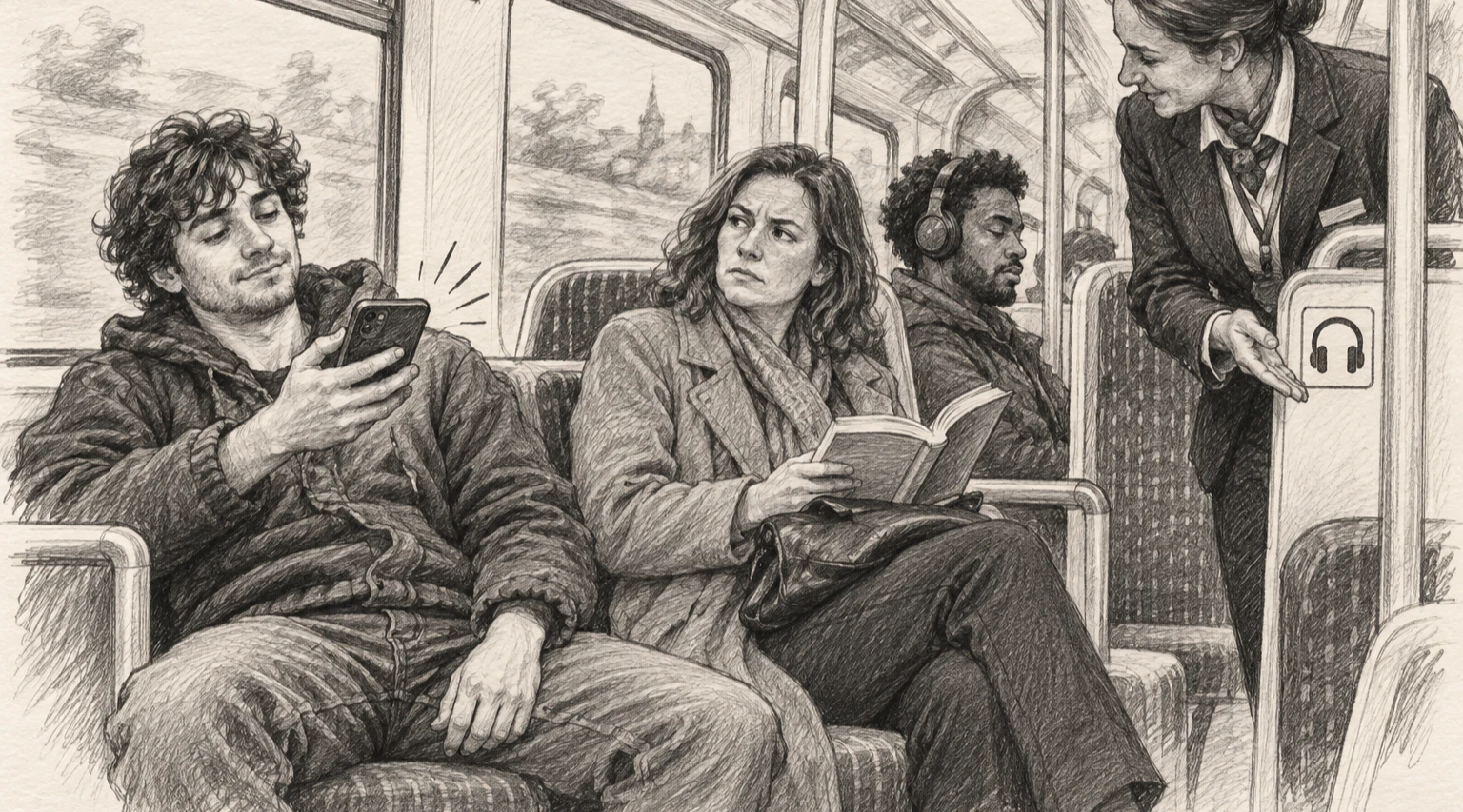
Britain has launched a campaign encouraging rail passengers to use headphones, alongside new guidance enabling English transport authorities to tackle disruptive behaviour on buses.
Announced on October 19, the initiative addresses music and videos played aloud in shared carriages. Railway operators will use announcements, posters and digital channels to remind passengers that their listening habits can disturb others.
Passengers who refuse to stop after being approached by authorised railway staff may be required to leave at the next station or face prosecution, with fines reaching £1,000.
That figure is a maximum penalty under existing railway rules, rather than an automatic charge whenever a phone makes a sound. The campaign is intended to make expectations clearer and coordinate messages previously delivered separately by individual operators.
Prime Minister Andy Burnham said loud phone use could quickly spoil a journey and that small changes in behaviour would improve public transport for everyone.
The bus measures operate through a different framework. Powers under the Bus Services Act 2025 allow local transport authorities across England to establish byelaws addressing nuisance behaviour, with fixed penalties of up to £100.
Potential offences include excessive amplified sound, vaping, littering and threatening conduct. Individual local byelaws require approval from the transport secretary before enforcement, meaning implementation will depend on the arrangements adopted in each area.
Enforcement will fall to authorised officers rather than bus drivers. Guidance favours an approach beginning with engagement and an explanation of the rules, followed by enforcement when a person refuses to comply.
Authorities are also expected to publicise their rules and consider passengers’ circumstances when responding to incidents. The guidance emphasises proportionate action and awareness of vulnerabilities that might affect behaviour.
Together, the initiatives aim to make journeys quieter and more comfortable while distinguishing between an initial request for consideration and the formal consequences of continued disruption.