
News
German Theatre Protests Challenge Mass Contract Changes
Ensemble members demand stronger protection during leadership changes
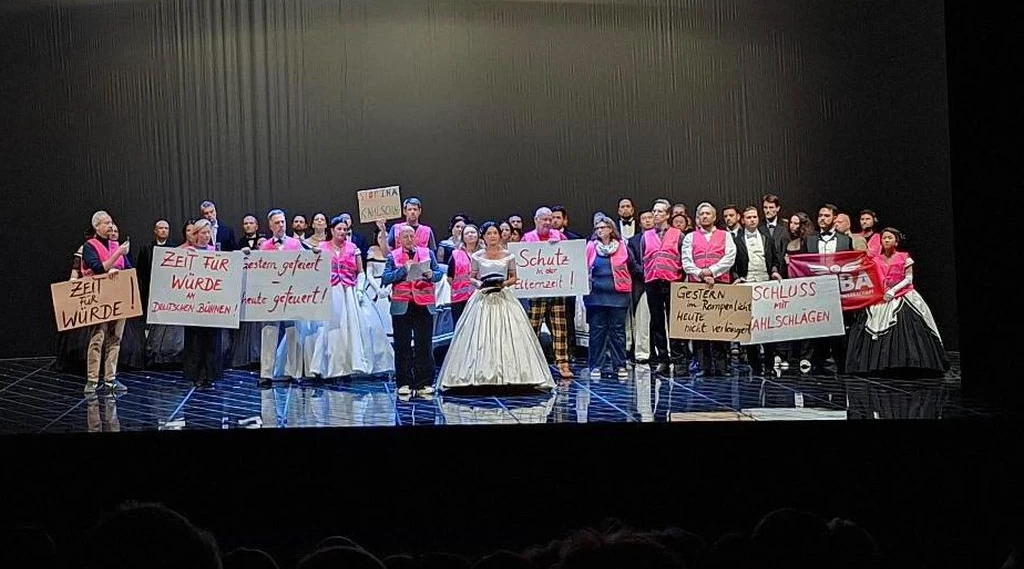
Performers in Düsseldorf and Münster have brought employment concerns onto the stage, protesting proposed contract non-renewals as incoming artistic directors prepare to reshape their ensembles.
At Deutsche Oper am Rhein, artists appeared before a performance of La traviata wearing high-visibility vests and carrying placards. Ensemble representatives said incoming general director Ina Karr intended not to renew twenty soloists, approximately 65 percent of the singing company.
They stressed the human consequences for performers who had established homes and family lives in Düsseldorf and Duisburg. Some said their first encounter with the incoming leadership had been a conversation about losing their positions.
A similar protest took place in Münster, where Neil Barry Moss will assume the general directorship. Union figures indicated that proposed changes could affect most of the dance ensemble, around two-thirds of the opera singers and the entire young-theatre ensemble. Those figures were not yet confirmed as final decisions by the theatre.
Moss has defended artistic renewal as essential to the ensemble system, arguing that fixed-term appointments allow institutions to change direction and create opportunities for emerging artists.
The dispute centres on Germany’s NV Bühne collective agreement. Artistic contracts generally run for a season and renew automatically unless notice is given within the required period. A non-renewal therefore differs from an immediate dismissal, although its consequences can be equally serious for the individual.
The performers’ union GDBA is seeking substantial reform. Its demands include compensation when contracts are not renewed, limits on large-scale replacements and stronger protection for employees with caring responsibilities or particular vulnerabilities. It also argues that a change of director should not, by itself, justify ending employment.
Negotiations over these demands began in autumn 2025. The current protests give those discussions a public dimension, exposing the tension between an incoming director’s artistic freedom and the continuity on which performers build their careers.