
News
Germany Music industry generates more revenue and offers more jobs
The music industry is generating more revenue and offering more jobs than ever before.
The music industry is generating more revenue and offering more jobs than ever before. Whether it's record companies, concert organizers, recording studios, or music publishers, thousands of people are employed in the sector, and the number continues to grow. This growth is also reflected in the industry's increasing revenue.
In Germany, the music industry has become an important and dynamically growing economic sector. In recent years, it has steadily expanded, not only in terms of sales but also in the number of jobs it provides.
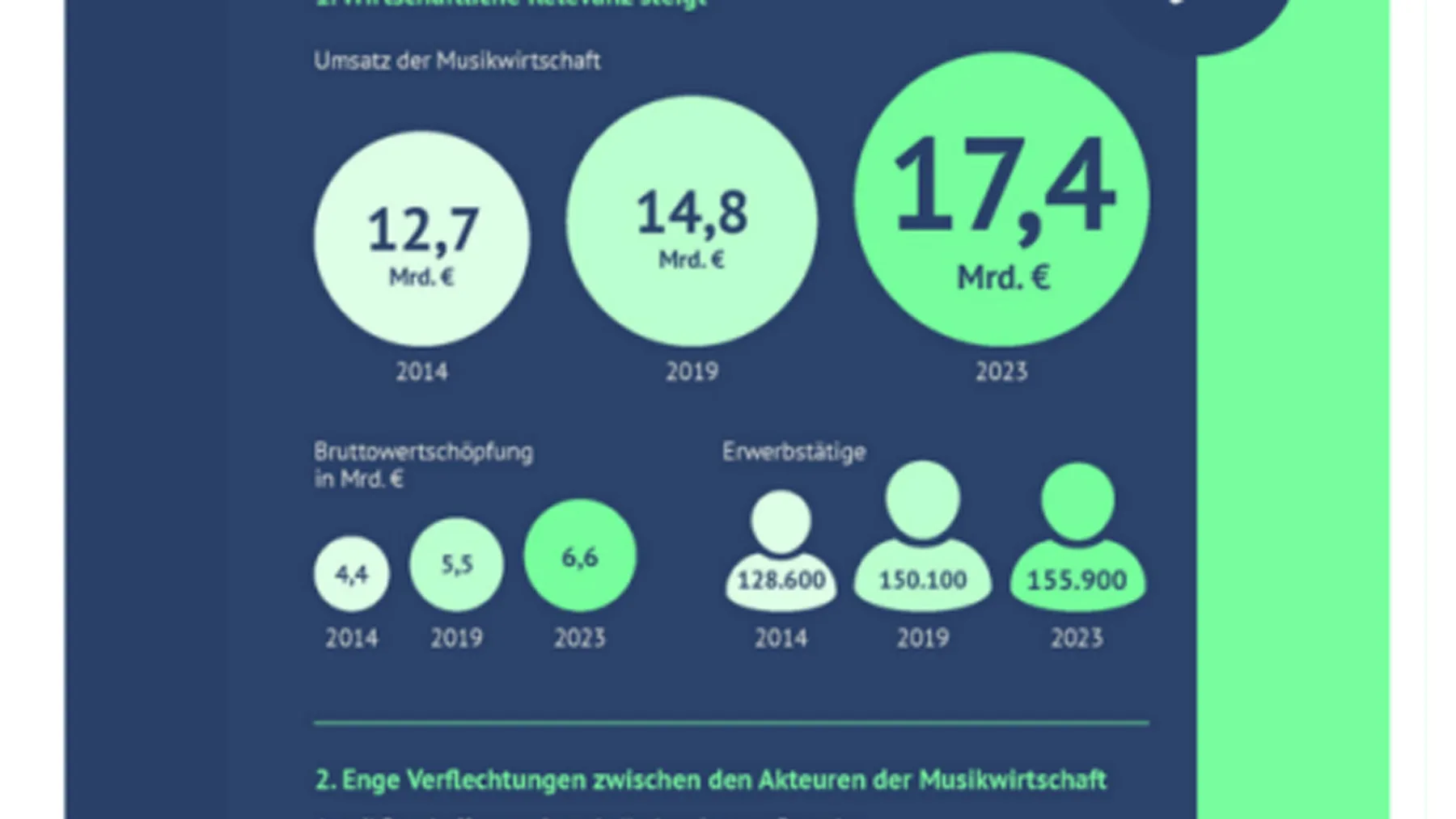
In 2023, the music industry—which includes the event sector, record companies, instrument manufacturers, music publishers, and collecting societies—generated approximately 17.4 billion euros (14.6 billion pounds) through its products and services, according to music industry associations and collecting societies at the Reeperbahn Festival in Hamburg. By comparison, in 2019, before the coronavirus pandemic, this figure was 14.8 billion euros (12.4 billion pounds), and in 2014, it was 12.7 billion euros (10.6 billion pounds).
After deducting the costs of raw materials, components, and other expenses from its total turnover, the music industry now achieves a gross value added of 6.6 billion euros (5.5 billion pounds). These figures, like sales, have been steadily increasing over the years. The authors of the study suggest that the music industry has gained further economic significance, with its relevance continuing to grow.
This rise in revenue has also led to more employment opportunities within the industry. For example, nearly 156,000 people were employed by music companies last year, including 64,000 self-employed individuals or company owners.
The study also highlights the positive impact the music industry's success has on adjacent sectors. The industry's economic achievements stem from the close collaboration between its various sub-sectors. Neighboring industries such as tourism, broadcasting, technology, and equipment manufacturing are increasingly benefiting from the music industry's growth.
According to Hamburg’s Senator for Culture, Carsten Brosda (SPD), the study demonstrates that music is not only of fundamental cultural importance but also a booming growth sector with high economic value for society. He added, "The study also proves the industry's solidarity, as it is closely networked and successfully addressing future challenges together."
The study was commissioned by the most prominent music industry associations and the two largest collecting societies, with financial support from the state of Hamburg and the federal government.