
News
Leipzig’s Mendelssohn Festival Turns Towards Jewish Musical Memory
Merkel and Widmann receive awards at the opening concert.
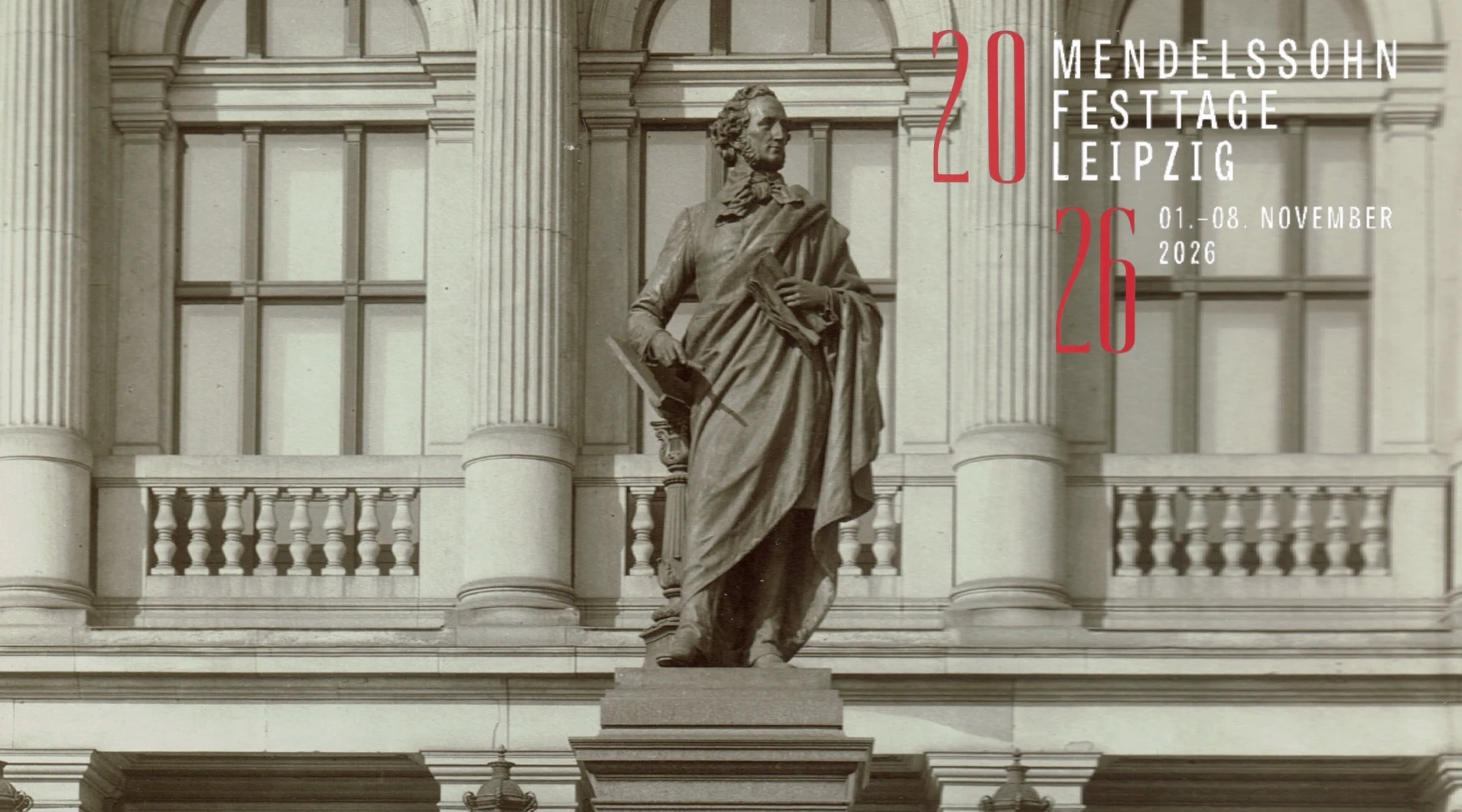
Leipzig’s Mendelssohn Festival will place Jewish musical heritage at the centre of its 2026 programme, connecting the composer’s legacy with works by musicians from different generations. Running from November 1 to 8, the festival participates in Saxony’s year of Jewish culture under the focus Tacheles.
The opening benefit concert takes place at the Gewandhaus on November 1 at 11am. Former German chancellor Angela Merkel and composer-clarinettist Jörg Widmann will receive the International Mendelssohn Prize Leipzig. Widmann also joins a performing line-up that includes violinist Carolin Widmann, pianist and festival curator Elena Bashkirova, and the vocal ensemble amarcord.
Mendelssohn remains the programme’s organising figure. His years as Gewandhauskapellmeister, from 1835 to 1847, helped establish Leipzig’s international musical standing. Yet the festival also looks beyond a single biography, bringing Władysław Szpilman, Mieczysław Weinberg, Hans Gál and Lera Auerbach into the discussion.
The opening programme includes music by Mendelssohn and Fanny Hensel, alongside Widmann’s response to the Wedding March and Prokofiev’s Overture on Hebrew Themes. Elsewhere, chamber concerts, piano recitals, orchestral performances and conversations distribute the theme across different musical forms.
On November 4, the anniversary of Mendelssohn’s death, a late-evening event at his former home combines music and spoken text. Thomas E. Bauer, Ulrich Matthes and Bashkirova are among its participants. Concerts at the house and the Gewandhaus keep the programme rooted in places closely associated with the composer.
The festival’s historical frame invites attention to both artistic achievement and reception. Mendelssohn’s music was suppressed under National Socialism because of his Jewish ancestry. Hearing his work beside that of later composers allows the programme to explore continuity, interruption and recovery without treating Jewish musical culture as a single style.