
News
Met Opera General Manager: Trump Era Had Lasting Impact on the Arts
Peter Gelb, General Manager of the Metropolitan Opera in New York, has spoken out about the far-reaching consequences of Donald Trump’s presidency on America’s cultural landscape.
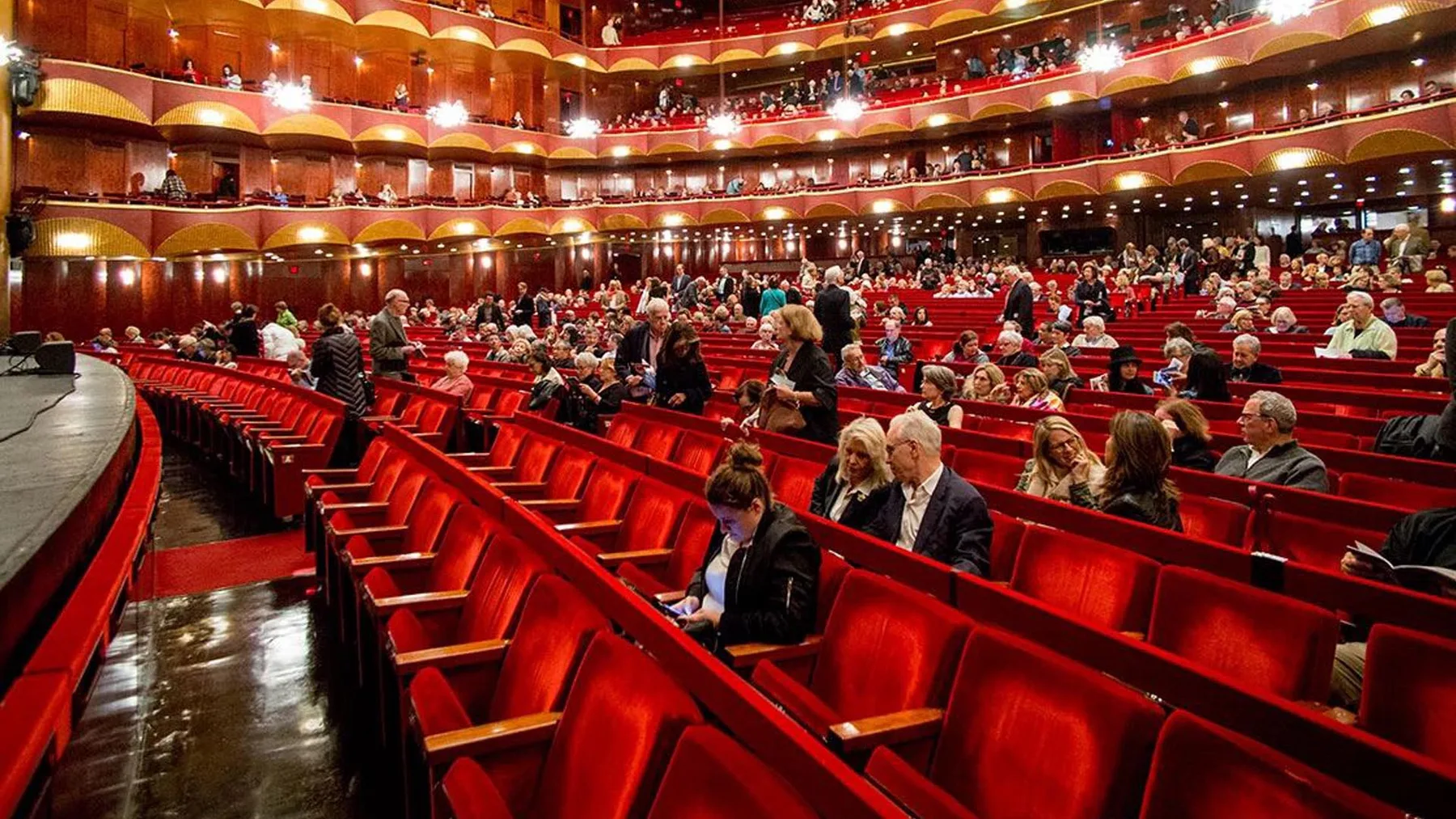
Peter Gelb, General Manager of the Metropolitan Opera in New York, has spoken out about the far-reaching consequences of Donald Trump’s presidency on America’s cultural landscape. In recent remarks, Gelb characterised the former president’s time in office as having a “profound and complicated” effect on the country’s cultural ecosystem.
According to Gelb, Trump’s rise to power led to a sharp decline in tourism to New York City — with overall visitor numbers down 17% and Canadian tourism plummeting by 75%. For the Met Opera, whose pre-pandemic income relied on international audiences for roughly 20% of ticket sales, the impact was direct and substantial.
The Trump administration also attempted to eliminate nearly all federal arts funding early in its term. While the Met receives less than 1% of its budget from federal sources — limiting the effect on its own operations — Gelb stressed that such cuts could be “devastating” for smaller cultural organisations across the country.
More significantly, Gelb warned of a gradual erosion of artistic freedom in the United States, describing it as an “insidious threat.” He cited the Kennedy Center for the Performing Arts as an example, noting that its dependence on federal funding leaves it vulnerable to political interference. “Artistic freedom is the foundation of democracy and civilisation,” Gelb said, warning that the global drift toward authoritarianism poses a serious risk. “We cannot allow it to be undermined.”
When asked why so many American artists and institutions remain silent in the face of authoritarian pressure, Gelb responded: “Because many are afraid.” He described the difficulty of speaking out under a government known for retaliatory behaviour. Still, he maintained that history has shown “intimidation under autocratic rule is never a recipe for success.”
Gelb emphasised that the Met stands for the values of democracy and free expression — values understood and upheld by its artists and staff. He has repeatedly championed resistance to authoritarianism, notably through programming such as Beethoven’s Fidelio, an opera often interpreted as a defence of freedom. “The Met is a global symbol of cultural democracy,” he said.
Despite ongoing political and financial pressure, the Met remains committed to its artistic independence. Gelb recalled that upon becoming general manager two decades ago, he established a firm principle: while the board may offer financial and governance support, it must not interfere in artistic matters. He likened this division to the American principle of “separation of church and state,” designed to protect creative integrity from donor influence.
Even during periods of hardship, Gelb asserted, the Met continues to present art that engages meaningfully with contemporary society — including both new works that address urgent issues and classical operas reinterpreted through a modern lens. “Our job is not to preach,” he said, “but to tell compelling stories that create resonance in a divided world.” Art, he concluded, must be a voice for “truth and freedom,” and the Met delivers its message not through moral instruction, but through the power of performance.
Gelb also issued a caution to European opera houses and cultural institutions, warning of the growing threats posed by right-wing populism and nationalism. Unlike in the U.S., where most major cultural institutions rely heavily on private donors, many European organisations are deeply dependent on government funding — a dependency that could prove perilous if political support were suddenly withdrawn.
He cited a recent incident in the UK, where a Conservative culture minister was criticised simply for attending an opera performance, as evidence of the widening rift between politics and culture. Gelb urged European institutions to respond not with fear, but with responsibility — by broadening their audiences without compromising artistic ideals.