
News
Turning a 7-Eleven into a Concert Hall
From convenience store to symphony hall: As cities constantly reinvent themselves, two distinctive projects in Chicago and Philadelphia are reshaping the relationship between commerce and culture, transforming abandoned retail spaces into vibrant performance venues.
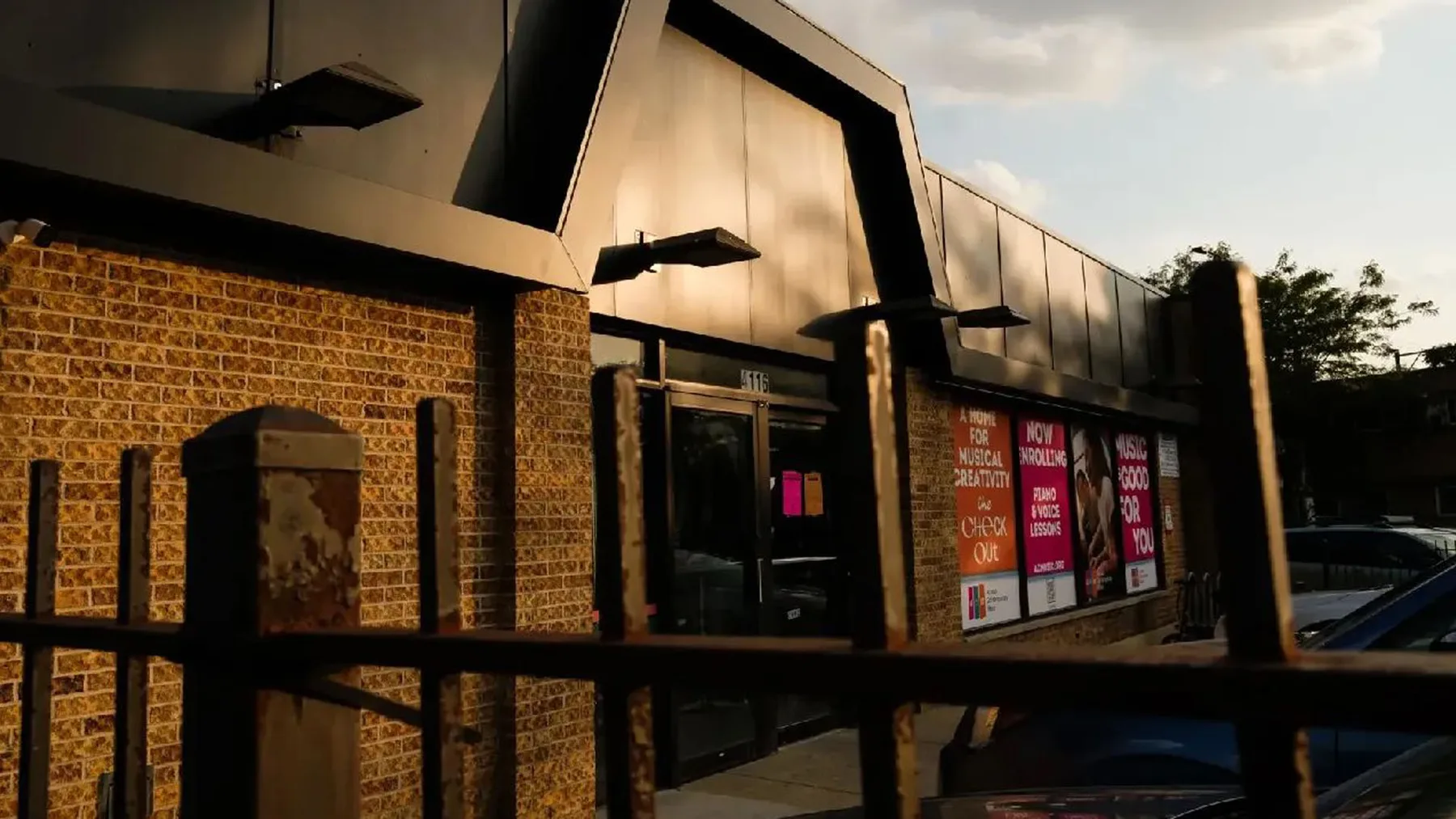
From convenience store to symphony hall: As cities constantly reinvent themselves, two distinctive projects in Chicago and Philadelphia are reshaping the relationship between commerce and culture, transforming abandoned retail spaces into vibrant performance venues.
A long-vacant 7-Eleven and a historic department store, once bustling centers of daily life, are now being reborn as homes for classical music and opera — proof that commercial shells can find new life through cultural imagination.
At 4116 North Clark Street in Chicago’s Lakeview neighborhood, a shuttered 7-Eleven has been reimagined by the nonprofit Access Contemporary Music (ACM) as a brand-new chamber music venue, aptly named “The CheckOut.” Its official opening is set for mid-September 2025.
The story began in February 2023, when ACM’s Executive Director Seth Boustead spotted a “For Lease” sign in the store’s dusty window while riding in a taxi. He immediately biked back, peered through the dim interior, and envisioned a daring possibility: “This would make a perfect chamber music hall.”
The renovation was no small task. The convenience store that once sold Slurpees and snacks required a complete overhaul, with costs projected at $300,000 to $400,000. Zoning restrictions in the residential district and local prohibitions on liquor licenses created further bureaucratic hurdles.
With the help of the local alderman’s office, ACM navigated permits, inspections, and zoning issues. A $250,000 community development grant from Chicago’s Department of Planning and Development, coupled with $470,000 in donor contributions (raised through naming opportunities for the stage and seats), made the project viable.
Yet, traces of its 7-Eleven past remain. The entry door still gives a nostalgic ding; behind the bar, a hidden trapdoor once used to dispose of grease survives; and Boustead even discovered an old employee training poster, which he plans to frame and hang in the restroom as a wink to the building’s former life.
The venue offers 53 cabaret-style seats at cocktail tables, hosting two to three chamber concerts each week. Programming will also include a Thursday jazz night and cabaret performances — filling a void left by the closure of Davenport’s Cabaret earlier this year.
The grand opening festival runs from September 13 to 28, 2025, headlined by ACM’s resident ensemble, the Palomar Trio, performing repertoire from Shostakovich to contemporary composer Reena Esmail. True to its origins, the venue will serve boozy Slurpees, playfully blending its commercial past with its new cultural identity.
Meanwhile, in Philadelphia, another iconic retail space is undergoing a parallel transformation.
The former Macy’s department store—originally the grand Wanamaker’s—closed its doors in March 2025. Now under the stewardship of Opera Philadelphia, the vast historic complex is being reimagined as a multifunctional cultural hub, with plans for opera, dance, film screenings, parties, and concerts.
At the heart of this reinvention is the legendary Wanamaker Grand Court Organ—one of the largest pipe organs in the world. With more than 28,000 pipes and cathedral-like acoustics in the building’s soaring atrium, the instrument will once again serve as the centerpiece of Philadelphia’s cultural life, bridging the grandeur of the past with the creative possibilities of the present.