
News
Irish Study Reveals High Rates of Playing-Related Muscular Pain Among Musicians
A recent study published in the Irish Medical Journal, as reported by The Irish Times, has found a high incidence of playing-related musculoskeletal disorders (PRMDs) among 120 young Irish musicians.
A recent study published in the Irish Medical Journal, as reported by The Irish Times, has found a high incidence of playing-related musculoskeletal disorders (PRMDs) among 120 young Irish musicians. PRMDs are defined as chronic pain and other symptoms that interfere with a musician’s ability to perform at their usual level.
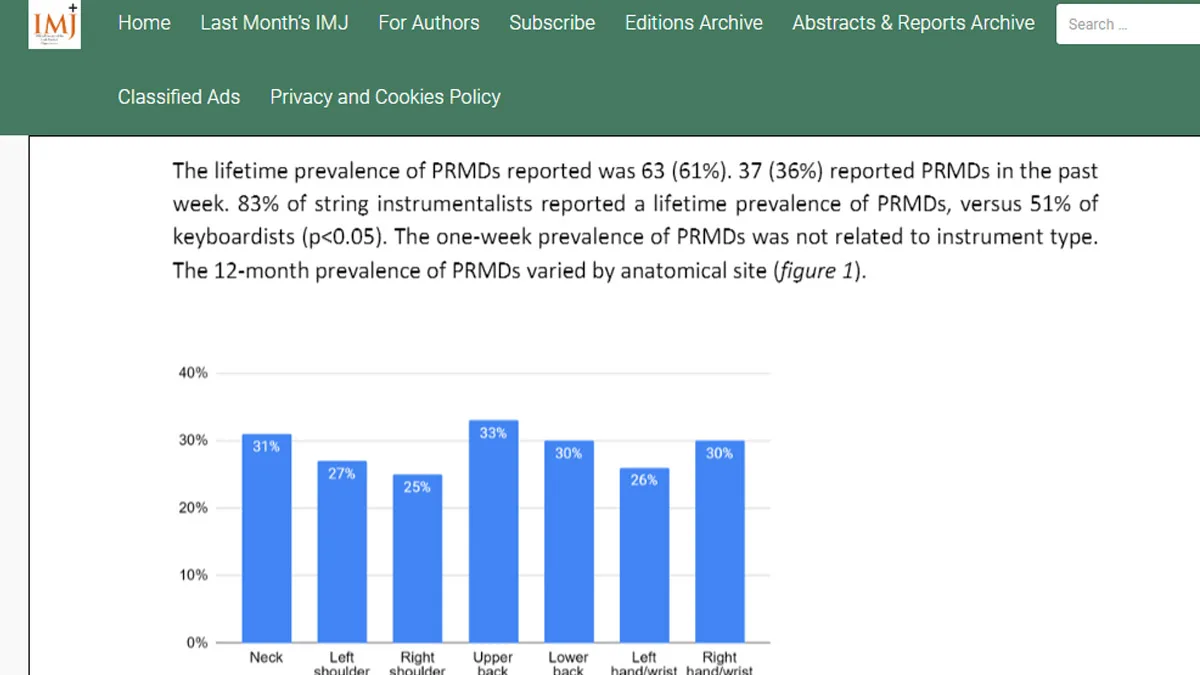
The survey respondents were third-level students aged 18 to 30. Among them, 103 were classical musicians and 17 were traditional musicians, with 71% being female and a median age of 19. The study revealed a 61% prevalence of PRMDs among the classical musicians surveyed.
The study explains that the lifetime prevalence of PRMDs among classical musicians internationally ranges from 62% to 93%. It adds that musicians are at greater risk of developing these disorders because they engage in repetitive motions for many hours each day.
Among the classical musicians, the most commonly played instruments were keyboard (47 participants) and string instruments (30 participants). The survey found that 83% of string players reported a lifetime prevalence of PRMDs.
For classical musicians, the most common locations for PRMDs were the upper back, followed by the lower back, and the right hand or wrist. In the traditional musician group, nine reported suffering from PRMDs. This group included two concertina players, two flute players, as well as bodhrán, bouzouki, harp, tin whistle, and uilleann pipes players. For these musicians, the hand or wrist was the most common site for PRMDs.
“Risk factors identified for the development of PRMDs included playing a string instrument and female gender,” the study explained. “The role of gender in dealing with PRMDs is highlighted by several associated findings in this study. These include the more than two-thirds majority of female students in both classical and traditional styles and the increased cumulative impact of PRMDs reported by female participants.”
“The high level of trauma reported in this research project will hopefully lead to the development of appropriate response mechanisms within educational institutions, with the overriding purpose of preventing profound PRMD morbidity,” the study concluded. “Future research should aim to establish effective interventions to prevent and mitigate the impact of PRMDs among musicians.”