
News
Why More And More Teachers Are Missing
There are fewer and fewer trained music teachers in Germany while the number of pupils is rising.
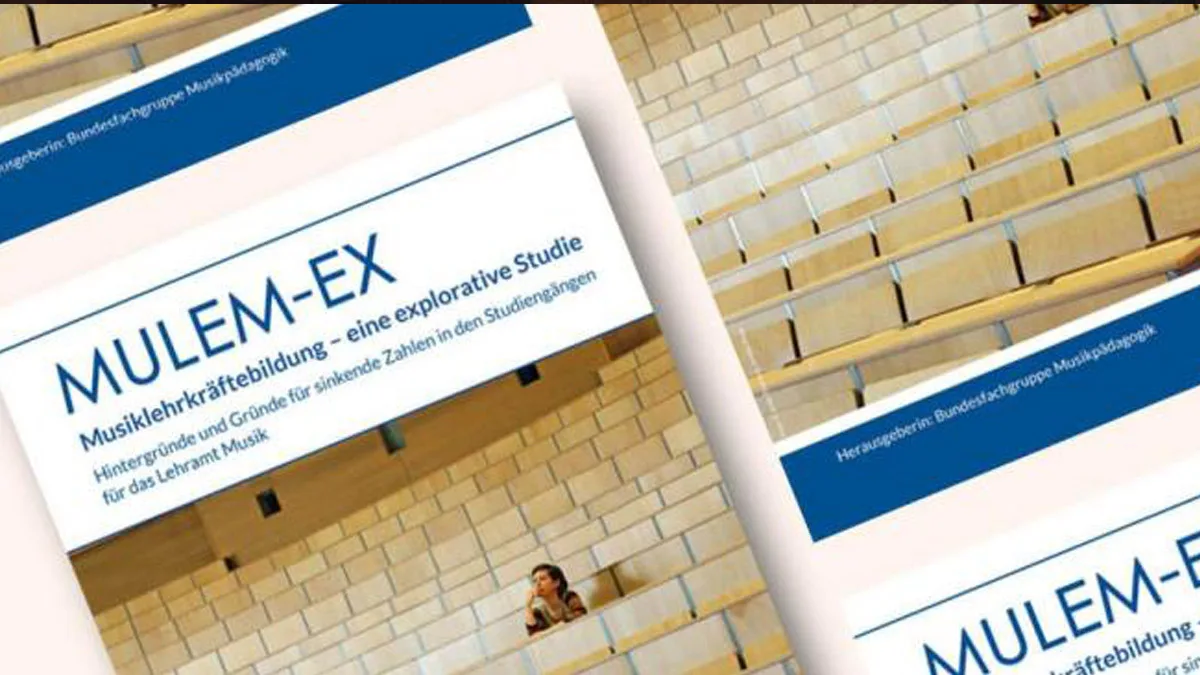
There are fewer and fewer trained music teachers in Germany while the number of pupils is rising. But why? A new study by the Bundesfachgruppe Musikpädagogik has identified three important reasons for this. Conclusion: universities urgently need to rethink.
More maths, more German, in case of doubt, less music lessons. That was clear to Minister President Markus Söder after the PISA shock. This, in turn, shocked music greats such as Sir Simon Rattle and Anne-Sophie Mutter, who wrote a letter of protest to the Bavarian Ministry of Education and Cultural Affairs.
New Study: Fewer And Fewer Applications For Music Teaching Degree Programmes
Music teaching in schools seems to be becoming more and more of a minor matter. This also means that fewer and fewer young people are opting to study music as a teacher. The new Germany-wide study MULEM-EX (short for ‘Musiklehrkräftemangel - eine explorative Studie’ - shortage of music teachers - an exploratory study) now provides facts and figures to show just how explosive the issue is. It is organized by the Federal Association for Music Education and funded by the Rectors' Conference of German Universities of Music.
Music Education Studies: High Hurdles, Little Practical Relevance
There are fewer and fewer trained music teachers in German schools. Compared to 2019, the number of applicants for the music education profession fell by 40 percent last year. The MULEM-EX study identifies three main reasons for this. Firstly, the music education profession is often perceived as rigid. Pupils are still expected to memorise too many facts and learn to read music instead of making music together. Secondly, the degree programme itself is still too classically oriented and has little to do with later school practice in the profession. Thirdly, in order to be accepted to a university, applicants not only have to master music theory but also at least two instruments.
Thomas Busch from the Professional Group for Music Education believes this is too high a hurdle and not practical enough. ‘You shouldn't expect people who come to universities to be egg-laying woolly-milk sows from the outset.’ Thomas Busch also believes that the musical environments of children and young people should be taken into account at the universities themselves. The rigid classical orientation is not in line with the interests of young people and needs to be much broader and more diverse.
Study Should Encourage Universities To Rethink
Of course, it will be a while before any concrete changes are made to the curricula, says Andreas Lehmann-Wermer. He helped analyse the study. But MULEM-EX has made it possible to ‘make evidence-based proposals’. He hopes that the results of the study will influence the discourse within universities and exert more pressure. After all, universities have ‘a social mission’.
Better Networking Between Schools And Universities Makes Sense
Thomas Busch suggests better networking between schools and universities, for example through ‘projects in schools to publicize the work of universities.’ This could help to overcome fears of ‘this microcosm of the conservatoire or the music teaching degree programme at universities.’
Making music fun and focusing again on the value of music lessons and making music together: a task that concerns us all.