
News
Dudamel finally explains why he left Paris Opera
In a comprehensive interview with El Mundo, Gustavo Dudamel, the Venezuelan conductor, finally elucidated the reasons behind his departure from the Paris Opera.
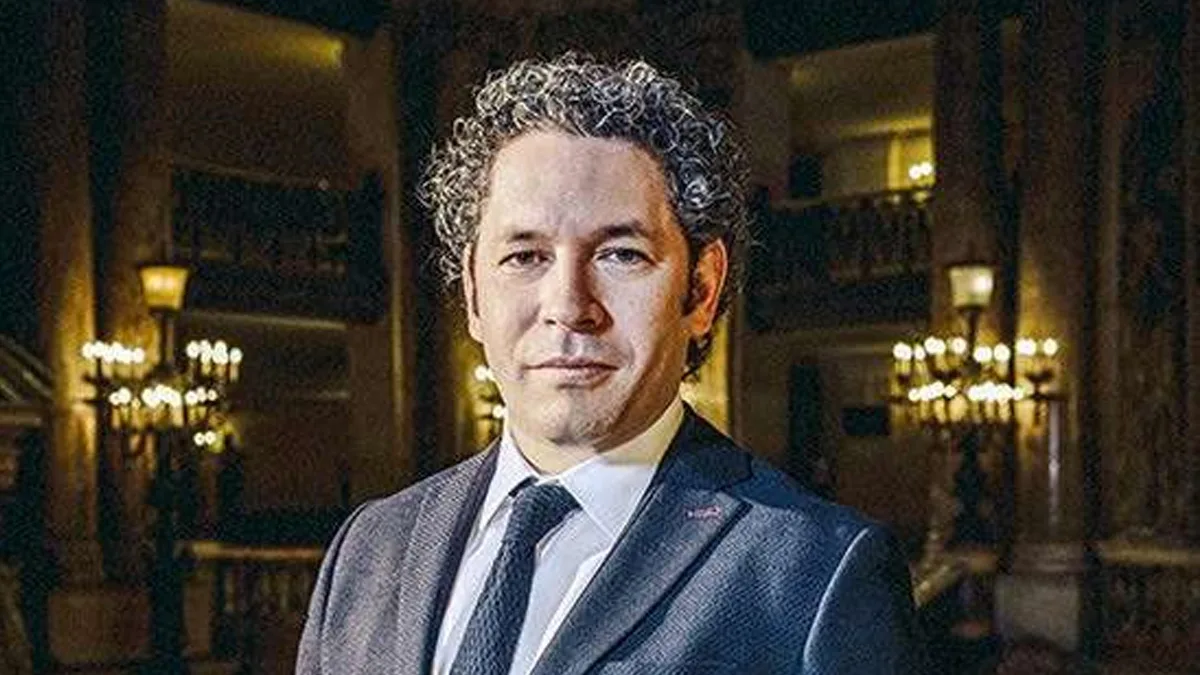
In a comprehensive interview with El Mundo, Gustavo Dudamel, the Venezuelan conductor, finally elucidated the reasons behind his departure from the Paris Opera, where he served as music director for over two years before resigning on May 25, 2023, causing widespread astonishment. Following his resignation, Dudamel had been reticent about the motives driving his decision. However, in a recent interview with Marie-Aude Roux for El Mundo, he broke his silence, providing a detailed account.
Dudamel reiterated that the "personal reasons" he cited a year ago were indeed the primary factors: "I found myself increasingly unable to manage the demands of my professional responsibilities alongside my personal life. I was discontented. This fundamental dissatisfaction compelled my decision." The conductor candidly acknowledged that the cancellation of the orchestra's spring 2023 tour due to a deadlock between the opera house management and the musicians was "the final straw." He remarked, "It's a weighty responsibility. While intentions are noble, excessive striving can breed discord and hinder artistic fulfillment. Personally, I felt unable to realize my artistic aspirations."
Dudamel also disclosed that his decision was not impulsive but the culmination of prolonged contemplation and extensive discussions with Alexander Neef, the General Manager of the Paris Opera. Despite these discussions, he lamented that "while numerous proposals were made, none were embraced by the Opera." Another source of disappointment was the abruptness of his departure: "What I regret is the lack of opportunity to bid farewell to the musicians properly. We had planned to discuss matters directly, and I had presumed I had a three-month transition period, but management opted for an immediate termination. This was an executive decision beyond my control."
Nevertheless, despite these setbacks, Dudamel fondly recalled the "deep connection he forged with the musicians" when he first conducted them in 2017. "It was an instant affinity and a transformative moment in my career," he reminisced. He recounted the enthusiasm he felt when "Alexander approached me, and I recall vividly my excitement at the significance of the challenges he presented."
Enumerating the factors contributing to his waning motivation, Dudamel highlighted the cancellation of a major international tour by the Paris Opera National in late April 2023, a workload surpassing his expectations, and an excessive number of musical theater performances. However, he expressed optimism for the Paris National Opera Orchestra: "I maintain great faith in the Paris National Opera Orchestra."
When asked about the prospect of future collaboration with the Paris Opera, Dudamel remarked, "I departed for practical reasons, yet I have not closed the door. I would welcome an invitation to return. I hold genuine affection, admiration, and respect for the Paris Opera. I anticipate a return when the timing is opportune."
Dudamel is set to return to Paris at the end of May to conduct the Los Angeles Philharmonic on the 30th, featuring works by Antonin Dvořák, John Williams, Gabriela Ortiz, and Ludwig van Beethoven's "Fidelio."
Separately, the Paris Opera has come under criticism in recent days for its lack of gender equality in programming.
On May 2, 2024, "Libération" published a column signed by nearly 260 cultural professionals, titled: "At the Paris Opera, a new performance season that ignores women." The upcoming season at the Paris Opera features only four female conductors, no female directors, and no female composers, a fact lamented by the signatories of the column.
In response, the Paris Opera contended that it is challenging to find female composers in the classical music sphere. Cellist Héloïse Luzzati rebuffed this argument, citing her leadership of the Elles Women Composers group, which advocates for classical female composers. She stated, "Female composers have existed in every era. However, the crux of the issue lies in identifying and rediscovering their works. Many compositions by women once featured in the opera repertoire have since been overlooked. For instance, Jeanne Leleu's 'Nautéos' was a ballet retained by the Paris Opera but never staged again."
Luzzati posited that the reluctance to feature works by female composers stems from programmers' aversion to risk-taking, prioritizing economic gains above all else. Musicologist Hyacinthe Ravet, another signatory, asserted, "With a firm commitment and proactive measures, other institutions will be inspired. Increased representation of works by female composers will pique wider interest in music, creating a virtuous cycle."
As the recipient of substantial public subsidies in France, amounting to up to 81 million euros annually, the Paris Opera is under pressure from the signatories to make gender equality in programming a condition for funding.